Nine Sarawak areas hit unhealthy air quality
What happened
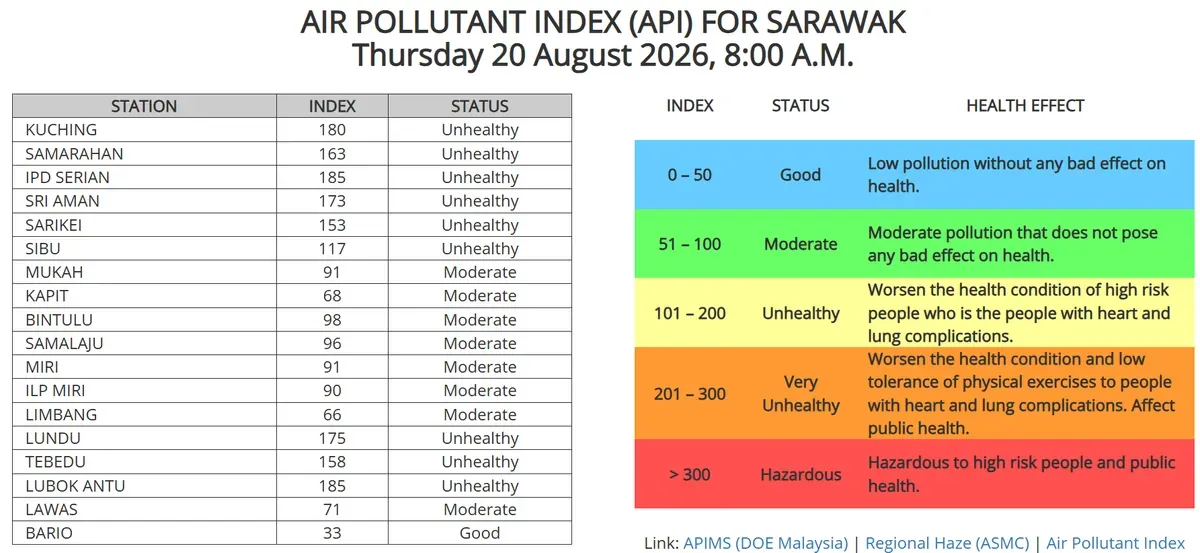
Nine locations in Sarawak recorded unhealthy air quality as of 8am on Thursday, according to the Natural Resources and Environment Board's (NREB) Daily Haze Watch. Serian and Lubok Antu registered the highest Air Pollutant Index (API) readings at 185 each. Kuching recorded 180, followed by Lundu at 175.
Sri Aman had a lower reading. The NREB's daily monitoring system tracks API levels to alert the public to air quality hazards.
Why it matters
Unhealthy air quality poses health risks, especially for children, the elderly, and those with respiratory conditions. Prolonged exposure to API levels above 100 can cause breathing difficulties and aggravate existing illnesses. The readings also disrupt daily activities, including outdoor work and school sessions.
Haze episodes are a recurring seasonal issue in Malaysia, often linked to land and forest fires. The affected areas may require public health advisories and emergency response measures.
Impact on Sarawak
Sarawak's economy, particularly tourism and outdoor industries, may face short-term disruptions due to poor visibility and health concerns. Local businesses, including food stalls and construction sites, could see reduced activity. Schools in the affected districts might need to suspend outdoor activities or close temporarily.
The state government may need to distribute masks and issue health warnings. Prolonged haze could also strain healthcare services in affected towns.
Regional context
Sarawak is not alone in facing haze; neighbouring states in Malaysia and Indonesia often experience similar conditions during the dry season. Transboundary haze from forest fires in Sumatra and Kalimantan frequently affects Malaysian skies. The NREB's monitoring highlights the need for regional cooperation on fire prevention and air quality management.
Malaysia's API system categorises readings above 100 as unhealthy, with 200 and above considered very unhealthy. The current readings, while high, have not yet reached emergency levels.
Response so far
As of the report, no official statement from the Sarawak State Disaster Management Committee has been released. The NREB's Daily Haze Watch serves as the primary source of real-time data for the public. Residents are advised to limit outdoor activities and wear masks when necessary.
Local authorities may activate standard operating procedures for haze, including distributing masks and advising schools. The situation remains fluid, and further updates are expected as the day progresses.
What to watch
Authorities will monitor API readings closely over the next 24 hours to see if conditions improve or worsen. If readings exceed 200, the state may declare a health emergency. The public should stay updated via the NREB's official channels.
Seasonal weather patterns, including wind direction and rainfall, will influence whether the haze persists. Any change in fire activity in nearby regions could also affect Sarawak's air quality.